Patient Portal
 Online Payment
 Doctor Referral
 Financing
If you have started holding your phone a little farther away to read it, you are in good company. The gradual loss of near focus is called presbyopia, and it reaches nearly everyone at some point after age 40.
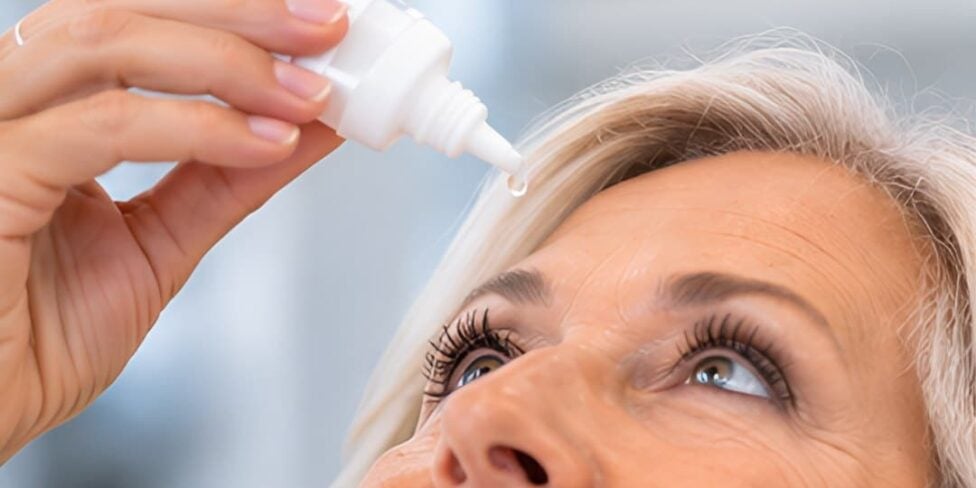
On October 16, 2026, the FDA approved a once-daily prescription eye drop for presbyopia in adults. News like this tends to generate questions in our Largo office, so here is a plain look at what was approved, how it works, and where it fits among the other ways reading vision gets treated.
What the FDA Approved
Phentolamine ophthalmic solution 0.75%, sold under the name Ryzumvi, is now approved to treat presbyopia in adults. The same formulation already carried an approval for reversing dilation after an eye exam. This new approval covers near vision.
The drop works on the pupil rather than on the focusing muscle. It is an alpha adrenergic blocker, which makes the pupil smaller. A smaller pupil increases depth of focus, the same optical effect that lets a camera hold more of a scene in focus when the aperture is narrowed. In the phase 3 VEGA-3 trial, 27.2 percent of participants using the drop gained three lines or more of near vision at the 12 hour mark, compared with 11.5 percent of participants on placebo. In that trial the drop was used once daily in the evening.
Why Near Vision Changes After 40
The lens inside your eye starts out flexible. When you look at something close, a ring of muscle changes the shape of that lens and pulls the near image into focus. Over the years the lens stiffens, that shape change gets smaller, and close work starts to need more light, more arm length, or reading glasses.
Presbyopia is not a disease and it is not a sign that something has gone wrong with your eyes. It is a predictable change, and it keeps progressing into the early 60s before it levels off. That progression matters when you are weighing treatments, because an answer that works well at 45 often needs revisiting at 55.
What a Pupil Drop Can and Cannot Do
A drop like this treats the symptom optically. It does not restore the lens flexibility you had at 25, and it does not slow presbyopia down. For some people that trade is well worth it. For others it is not the right fit. A few things worth knowing before you ask about it:
- The effect is temporary and wears off, so this is an ongoing daily prescription rather than a one time fix.
- The most common side effects reported in the presbyopia trials were red eyes, in about 21 percent of participants, and irritation at the spot where the drop was placed, in about 16 percent.
- It is not recommended when there is active inflammation inside the eye, such as iritis.
- Contact lens wearers need to remove their lenses before using it and wait about 10 minutes before putting them back in.
- Response varies quite a bit. Most participants in the trial did not reach the three line improvement mark, so realistic expectations matter more than the headline.
We want to be straightforward about one thing: this is not a drop we currently prescribe at St. Michael’s, and the manufacturer has not yet announced when it will reach pharmacies. We are watching it. If you are curious whether a pupil drop is a direction worth pursuing for you once it is available, that is a good conversation to have at your next visit.
The Other Ways Presbyopia Gets Treated
Reading glasses and progressive lenses are still the simplest and least invasive answer, and for plenty of patients they are the right one. Multifocal contact lenses are another option, and some patients do well with a contact lens setup where one eye is corrected more for distance and the other more for near.
Surgical options come into the picture at different points. If a cataract is developing, the lens implant used during cataract surgery can often be selected with your near vision needs in mind, which means one procedure addresses both problems. If you do not have a cataract but want to get out of reading glasses, a clear lens exchange replaces the stiffened natural lens with an implant that corrects distance and near. For patients considering laser vision correction, the treatment plan can sometimes be designed with reading vision in mind as well. Which of these makes sense depends on your prescription, the health of your cornea and retina, and how your eyes work together, which is why none of it can be decided from a website.
Trouble Reading Is Not Always Presbyopia
This is the part we would most want you to take from the news. When reading gets harder, presbyopia is the likely explanation, but it is not the only one. An early cataract can show up first as needing more light to read, or as print that looks washed out. Uncorrected astigmatism makes small text muddy. Dry eye, which is common here given our climate and our air conditioning, causes vision that blurs and clears as you blink, and it is often mistaken for a focusing problem.
A dilated comprehensive eye exam sorts these apart. It also checks the things that cause no symptoms at all in their early stages, including glaucoma and diabetic changes in the retina.
How We Work
St. Michael’s Eye & Laser Institute has been family owned and independent since 1961. We are not part of a chain or a private equity group, which means the doctor who evaluates you is the doctor who performs your procedure and the doctor who sees you at every follow-up visit. Our surgery center is accredited by the AAAHC and sits in the same building as our clinic, so surgery does not mean a trip to an unfamiliar hospital with a surgical team you have never met.
Frequently Asked Questions
Will an eye drop let me throw away my reading glasses?
For most people, no. In the trial that supported the approval, roughly one in four participants gained three lines or more of near vision, which means the majority gained less than that. A reasonable way to think about a pupil drop is as something that may reduce how often you reach for readers, not as a replacement for them.
Does insurance cover presbyopia treatment?
Coverage depends on what is being treated. A medically necessary procedure such as cataract surgery is generally covered, though premium lens implants chosen for near vision usually involve an out of pocket portion. Elective refractive procedures and most prescription drops for presbyopia are typically not covered. Our staff can review your specific plan with you, and you can see our current list of plans on our insurance page.
How do I know whether I have presbyopia or a cataract?
You often cannot tell from symptoms alone, because both can make reading harder. Presbyopia affects near vision specifically, while a cataract tends to affect distance vision too, and frequently brings glare around headlights, dulled colors, or a prescription that keeps changing. An exam with dilation gives a clear answer in a few minutes.
Talk With Us About Your Reading Vision
New treatments are worth paying attention to, but the useful first step has not changed: find out exactly why your near vision is giving you trouble, then choose from the options that actually apply to your eyes. If reading has become a daily annoyance, or if it has been more than a year since your last exam, we would be glad to see you.
Call us at (727) 202-2020 or book your appointment online.